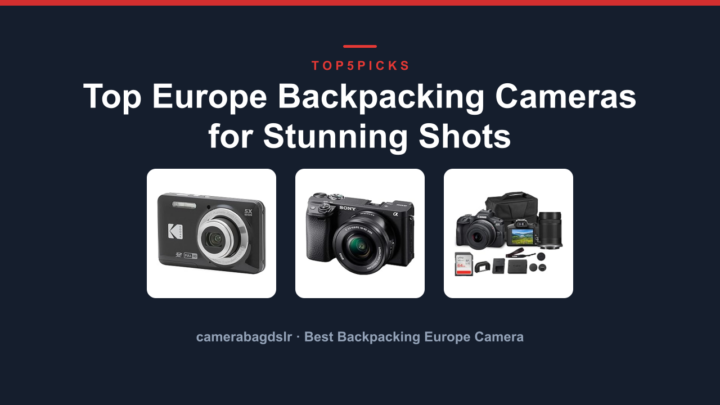
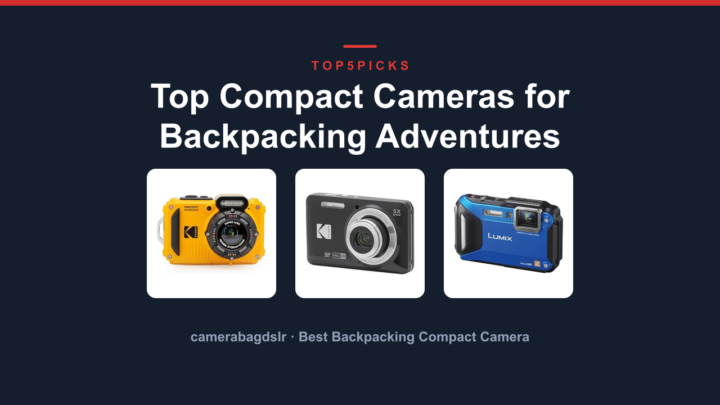
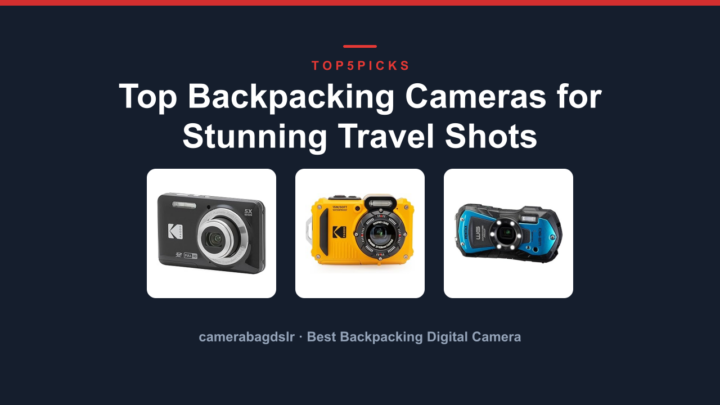
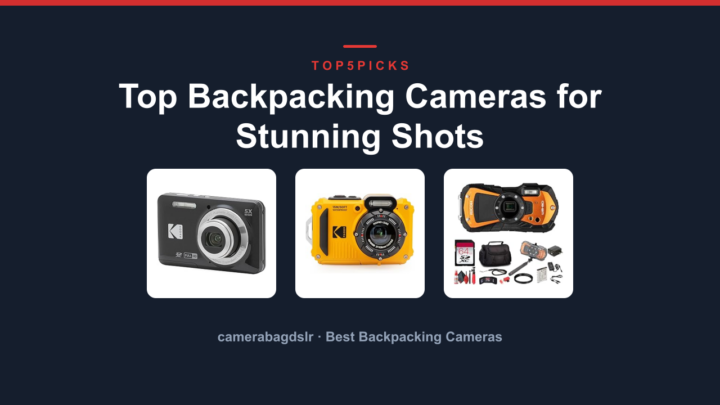
This guide tells you which cameras and tripods actually hold up on the trail, based on real owner feedback and manufacturer specs, not marketing hype. If you’re looking for a full DSLR setup, this isn’t the category for you.
Everything below comes from current Amazon product data, verified buyer reviews, and official specifications. We didn’t test these ourselves, but we’ve analyzed what real users report after months of travel.
Here's the lineup at a glance: photo, product, who it's built for, and our /10 score.
#4
KODAK15m waterproof
7.5OUT OF 10
Build Quality7.0
Portability9.0
Stability6.5
Value8.0
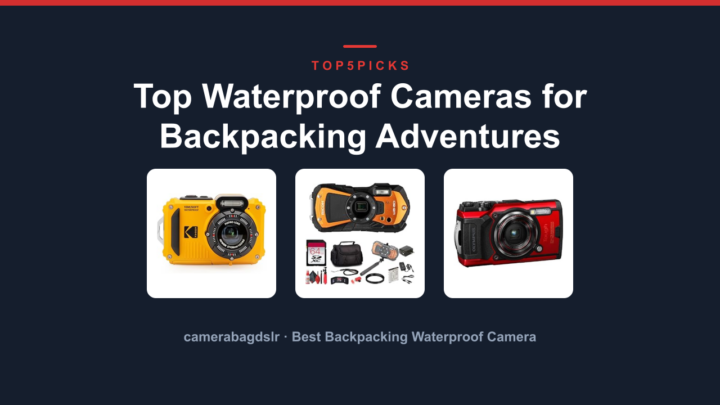
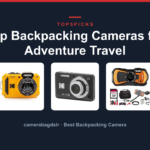
This is the only point-and-shoot here that’s fully waterproof to 15 meters, making it ideal for snorkeling, diving, or any rugged outdoor activity. The KODAK PIXPRO WPZ2 is simple to use, with a 16MP sensor and4X optical zoom. It’s a no-fuss option for travelers who want a durable, waterproof camera without the complexity of interchangeable lenses or advanced settings.
The bright yellow color makes it easy to spot in your bag or underwater, and the large buttons are easy to use even with gloves on. It’s a great choice for families or beginners who want a tough camera for outdoor adventures.
Flaws but not dealbreakers. The image quality isn’t on par with higher-end cameras, and the lack of manual controls limits creative flexibility. The plastic build also feels less premium compared to other options.
Need better image quality? The
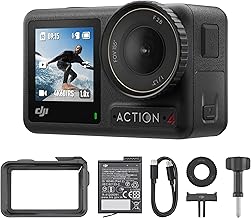
DJI Osmo Action 4 offers 4K video and superior stabilization for more demanding users.
⚠Durability: While waterproof, the plastic body may not withstand rough handling as well as metal-bodied cameras.
Pros
- ✓Fully waterproof to 15 meters without a case.
- ✓Simple point-and-shoot operation for beginners.
- ✓Bright color and large buttons for easy handling.
- ✓4X optical zoom for versatile framing.
Cons
- ✕Image quality is mediocre compared to higher-end cameras.
- ✕Plastic build feels less durable.
- ✕Lacks manual controls for advanced users.
Best for: Snorkelers, divers, and outdoor enthusiasts who need a simple, waterproof camera for rugged conditions.
KODAK PIXPRO FZ55 16MP Compact Digital: Best for Compact Zoom Versatility
#5
KODAK5X optical zoom
7.2OUT OF 10
Build Quality7.0
Portability9.5
Stability6.0
Value8.0
This is the most compact camera here with a 5X optical zoom, making it a versatile pocket-sized option for travelers who want flexibility without bulk. The KODAK PIXPRO FZ55 is easy to carry and offers a decent zoom range for framing shots from a distance. It’s a great choice for sightseeing or casual photography.
The camera is straightforward to use, with a simple interface that’s perfect for beginners. The 16MP sensor delivers decent image quality for its size, and the compact design makes it easy to slip into a pocket or small bag.
Flaws but not dealbreakers. The image stabilization isn’t as robust as higher-end models, and the lack of manual controls limits creative options. The plastic build also feels less sturdy.
Need better stabilization? The
DJI Osmo Action 4 offers superior stabilization and 4K video for more demanding users.
⚠Stabilization: The lack of advanced stabilization means shaky footage in fast-moving or low-light situations.
Pros
- ✓5X optical zoom for versatile framing.
- ✓Ultra-compact and lightweight for easy travel.
- ✓Simple interface for beginners.
- ✓Affordable price for a budget-friendly option.
Cons
- ✕Image stabilization is weak compared to action cameras.
- ✕Plastic build feels less durable.
- ✕Lacks manual controls for advanced users.
Best for: Travelers who want a compact, zoom-capable camera for casual sightseeing and everyday shots.
Buying Guide: Portability, Durability, Use Case and Budget
Portability
Backpacking cameras and tripods need to be light and compact. The DJI Osmo Action 4 Essential Combo weighs just 149 g, making it the easiest to carry, while the K&F CONCEPT 64 inch tripod, at 1.4 kg, is the heaviest but offers the most stability.
If you’re hiking long distances, prioritize weight. The Amazon Basics 50-inch tripod strikes a balance at 0.9 kg, while the KODAK PIXPRO FZ55 is the lightest camera at 125 g.
Durability
For rugged conditions, waterproofing and build quality matter. The DJI Osmo Action 4 is waterproof to 18 meters, and the KODAK PIXPRO WPZ2 handles depths of 15 meters. Both are built to withstand drops and bumps.
The K&F CONCEPT and Amazon Basics tripods use aluminum for durability, but the K&F’s thicker legs give it an edge in stability.
Use Case
Action shots require stabilization and durability. The DJI Osmo Action 4 excels here with 4K video and waterproofing. For static shots, the K&F CONCEPT tripod provides the best stability.
Underwater photography is best handled by the KODAK PIXPRO WPZ2, while the KODAK PIXPRO FZ55 is ideal for casual travel with its 5X zoom.
Budget
The Amazon Basics 50-inch tripod offers the best value for stability on a budget. For cameras, the KODAK PIXPRO FZ55 is the most affordable, while the DJI Osmo Action 4 is a premium choice for serious adventurers.
The Best Camera Gear for Backpacking & Hiking 2025via Darwin onthetrail
Who Should NOT Buy Best Backpacking Travel Camera
A backpacking travel camera is the wrong purchase for professional photographers or videographers who need interchangeable lenses, full manual controls, or large sensors. Here’s who they are, and what to look at instead.
You Need Professional-Level Image Quality
If you’re shooting for commercial projects or high-end personal work, the small sensors and fixed lenses on these cameras won’t cut it. Instead, consider a mirrorless camera like the Sony A7 series or a DSLR with interchangeable lenses. These offer superior image quality, manual controls, and the ability to swap lenses for different shots.
You Want a Full Vlogging Setup
For vloggers who need flip screens, external mic inputs, and advanced audio controls, these compact options may fall short. A dedicated vlogging camera like the Sony ZV-1 or Canon EOS M50 would be a better fit, offering features tailored for content creation.
The small sensors on these cameras struggle in low-light conditions. If you frequently shoot in dim environments, a camera with a larger sensor and better low-light performance, such as the Fujifilm X-T4 or a full-frame mirrorless, would be more suitable.
Final Verdict
The DJI Osmo Action 4 Essential Combo is the best Best Backpacking Travel Camera overall, thanks to its 4K video, waterproofing, and ultra-compact design. It’s the most versatile option for adventurers who need high-quality footage in a rugged, portable package.
Want a stable setup for long-exposure shots? Get the K&F CONCEPT 64 inch for its full-height stability and durable aluminum build.
Need a budget-friendly tripod? The Amazon Basics 50-inch delivers solid performance without breaking the bank.
If you’re still unsure, check the Who Should NOT Buy section to see if a different type of camera might suit your needs better.
Fujifilm X100v for Backpacking, hiking, and travel (a long term review)via Emory, By Land
FAQ
What's the best Backpacking Travel Camera overall?
The DJI Osmo Action 4 Essential Combo is the top pick for its combination of 4K video, waterproofing, and portability.
Which camera is best for underwater photography?
The KODAK PIXPRO WPZ2 is fully waterproof to 15 meters, making it ideal for snorkeling and diving.
What’s the most stable tripod for backpacking?
The K&F CONCEPT 64 inch offers the best stability with its full-height aluminum build.
Are these cameras good for low-light photography?
No, the small sensors on these cameras struggle in low-light conditions. For better performance, consider a camera with a larger sensor.
Can I use these tripods for professional work?
The K&F CONCEPT 64 inch is sturdy enough for semi-professional use, but professionals may prefer heavier-duty tripods for maximum stability.
Which option is the most budget-friendly?
The Amazon Basics 50-inch tripod and KODAK PIXPRO FZ55 camera offer the best value for budget-conscious buyers.