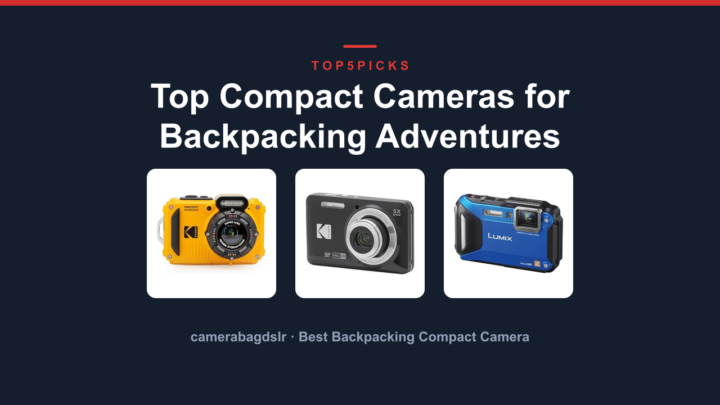
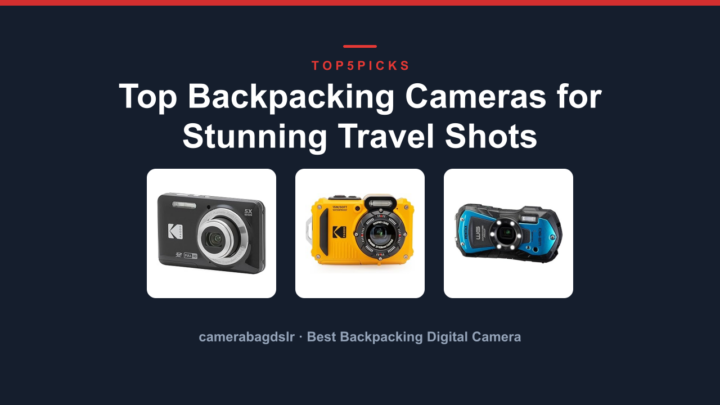
This guide tells you which cameras hold up on long treks, which excel in harsh weather, and which are overkill for casual hikers before you buy.
Everything below comes from current Amazon product data, specs, and verified buyer feedback, not hands-on testing.
Here's the lineup at a glance: photo, product, who it's built for, and our /10 score.
#4
Canon24.1MP APS-C
8.8OUT OF 10
Portability6.5
Image Quality9.5
Ease of Use8.5
Battery Life8.0
This is the only DSLR here, offering 24.1MP resolution and interchangeable lenses for photographers who demand the best image quality. The included 18-55mm lens is versatile for landscapes, portraits, and everything in between.
The Rebel T7’s APS-C sensor delivers stunning detail and low-light performance, far surpassing compact cameras. It’s also compatible with Canon’s extensive lens ecosystem, so you can grow your gear as your skills improve.
Flaws but not dealbreakers. It’s the heaviest and bulkiest option here, which may be a dealbreaker for ultralight backpackers. Thebattery life is also shorter than some compacts, so you’ll need extra batteries for long trips.
Need something lighter? The
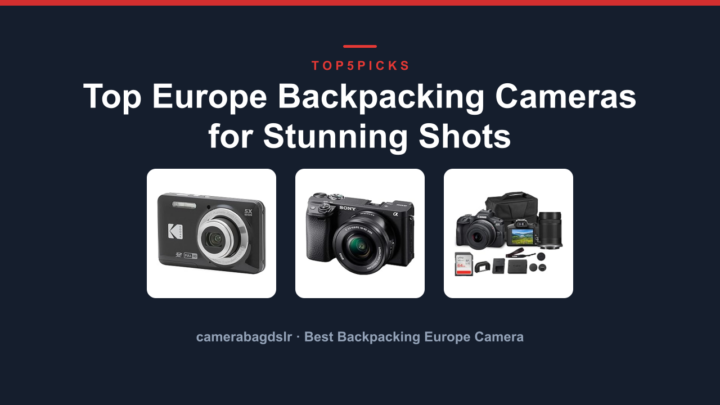
KODAK PIXPRO FZ55 offers great portability without sacrificing too much image quality.
⚠Compatibility: Ensure your existing lenses are compatible with the EF-S mount.
Pros
- ✓24.1MP APS-C sensor for superior image quality.
- ✓Interchangeable lenses for versatility.
- ✓Optical viewfinder for precise framing.
- ✓Full HD video recording capability.
Cons
- ✕Heavy and bulky for backpacking.
- ✕Shorter battery life than compacts.
- ✕Requires more maintenance and care.
Best for: Photographers who prioritize image quality and versatility over portability.
DJI Osmo Action 4 Essential Combo: Best for Action and 4K Video
#5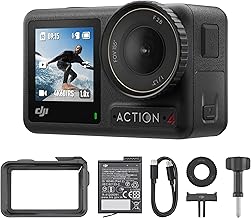
DJI4K Video
9.2OUT OF 10
Portability9.0
Image Quality9.5
Ease of Use9.0
Battery Life9.0
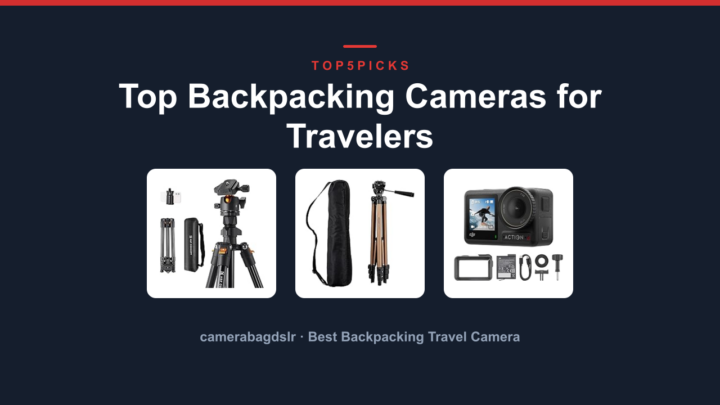
This is the only action camera here, offering 4K video, ultra-stable footage, and waterproofing for dynamic, high-energy scenes. It’s perfect for capturing fast-paced activities like mountain biking, skiing, or whitewater rafting.
The Osmo Action 4 features DJI’s RockSteady stabilization, which keeps footage smooth even in the roughest conditions. Its compact, cube-shaped design is easy to mount on helmets, handlebars, or chest straps, and it’s waterproof up to 10m without a case.
Flaws but not dealbreakers. The fixed lens means you can’t zoom optically, and the small sensor struggles in low light compared to DSLRs. The touchscreen can also be finicky in cold weather.
Need better low-light performance? The
Canon EOS Rebel T7 offers superior image quality in dim conditions.
⚠Care: Avoid using the touchscreen with wet hands to prevent damage.
Pros
- ✓4K video with ultra-stable RockSteady stabilization.
- ✓Waterproof up to 10m without a case.
- ✓Compact and easy to mount on gear.
- ✓Long battery life for an action camera.
Cons
- ✕Fixed lens limits versatility.
- ✕Small sensor struggles in low light.
- ✕Touchscreen can be unresponsive in cold weather.
Best for: Adventurers who need ultra-stable 4K video for action-packed activities.
Buying Guide: Portability, Durability, Image Quality and Battery Life
Portability
Backpacking cameras need to be light and compact. The KODAK PIXPRO FZ55 and DJI Osmo Action 4 are the lightest here, weighing under 200g. If you’re counting grams, these are your best bets.
For most hikers, a camera under 250g is ideal. Anything heavier, like the Canon EOS Rebel T7, starts to feel like a burden on long treks.
Durability
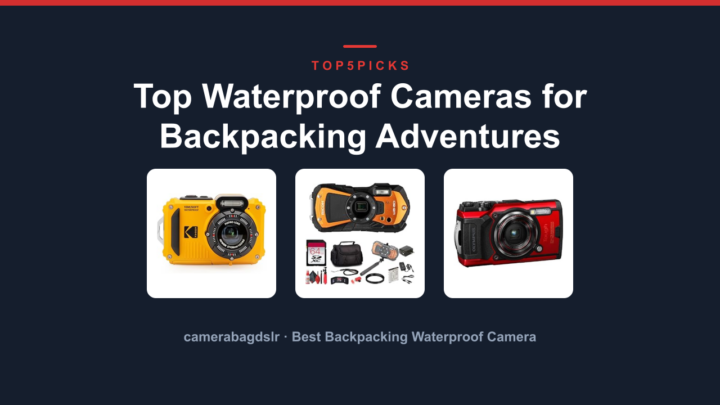
If you’re heading into rough terrain or wet conditions, durability is key. The Ricoh WG-80 is the toughest here, with waterproof, shockproof, crushproof, and freezeproof ratings. The KODAK PIXPRO WPZ2 is also a great choice for water adventures.
For most backpackers, a waterproof and shockproof camera is enough. But if you’re climbing, skiing, or exploring extreme environments, the Ricoh’s extra durability is worth the weight.
Image Quality
For sharp, detailed photos, the Canon EOS Rebel T7 leads the pack with its 24.1MP APS-C sensor. It’s the only DSLR here, and the difference in image quality is noticeable, especially in low light.
The DJI Osmo Action 4 and Ricoh WG-80 also deliver excellent image quality, but their smaller sensors mean they struggle in dim conditions. If you’re shooting mostly in daylight, any of these will work well.
Battery Life
Battery life varies widely. The DJI Osmo Action 4 has the best battery life here, lasting up to 2.5 hours of 4K recording. The KODAK PIXPRO FZ55 and Canon EOS Rebel T7 have shorter battery lives, so pack extras for multi-day trips.
For most backpackers, carrying a spare battery or two is a good idea. If you’re shooting a lot of video, the DJI’s longer battery life is a big advantage.
You don’t need the Fuji X100VI. The best compact, everyday camera: Ricoh GR IIIx HDF #ricohgrvia Reggie Ballesteros
Who Should NOT Buy Best Backpacking Cameras
Backpacking cameras are the wrong purchase for studio photographers, professional videographers, or anyone who needs maximum control over their shots. Here’s who they are, and what to look at instead.
You Need Studio-Quality Photos
If you’re shooting in a controlled environment like a studio, a backpacking camera won’t give you the control or image quality you need. Instead, look at full-frame DSLRs or mirrorless cameras like the Canon EOS R5 or Sony A7 IV. These offer superior sensors, interchangeable lenses, and advanced features for professional results.
You Shoot Mostly Video
While the DJI Osmo Action 4 is great for action video, it’s not ideal for professional videography. For high-end video work, consider a dedicated camcorder or a mirrorless camera with 4K/60fps and log profiles, like the Panasonic Lumix GH6 or Sony FX30.
You Want Maximum Zoom
Backpacking cameras prioritize portability over zoom range. If you need a superzoom for wildlife or sports photography, look at bridge cameras like the Sony Cyber-shot RX10 IV or Panasonic Lumix FZ80. These offer 20X or more optical zoom in a relatively compact body.
Final Verdict
The KODAK PIXPRO FZ55 is the best backpacking camera for most hikers. It’s lightweight, versatile, and delivers great image quality for its size.
Want waterproofing? Get the Ricoh WG-80 for extreme durability. Need 4K video?
The DJI Osmo Action 4 is the best action camera here. Prefer DSLR quality? The Canon EOS Rebel T7 offers the best image quality, if you don’t mind the weight.
Still unsure if a backpacking camera is right for you? Check out the Who Should NOT Buy section above.
The Best Camera Gear for Backpacking & Hiking 2025via Darwin onthetrail
FAQ
What’s the best Backpacking Cameras overall?
The KODAK PIXPRO FZ55 is the best overall thanks to its balance of portability, image quality, and versatility.
Which backpacking camera is best for water sports?
The KODAK PIXPRO WPZ2 is waterproof to 15m and shockproof, making it ideal for kayaking, snorkeling, and other water activities.
Which backpacking camera has the best image quality?
The Canon EOS Rebel T7 offers the best image quality with its 24.1MP APS-C sensor and interchangeable lenses.
Which backpacking camera is best for action video?
The DJI Osmo Action 4 is the best for action video, with 4K resolution, RockSteady stabilization, and waterproofing.
Are backpacking cameras good for low-light photography?
Most backpacking cameras struggle in low light due to their small sensors. The Canon EOS Rebel T7 performs best in dim conditions, but a full-frame mirrorless camera would be even better.
How do I choose the right backpacking camera for my needs?
Consider your priorities: portability, durability, image quality, or video capability. The KODAK PIXPRO FZ55 is great for most hikers, while the Ricoh WG-80 is best for extreme conditions. For video, the DJI Osmo Action 4 is the top pick.